
Rehabilitation providers
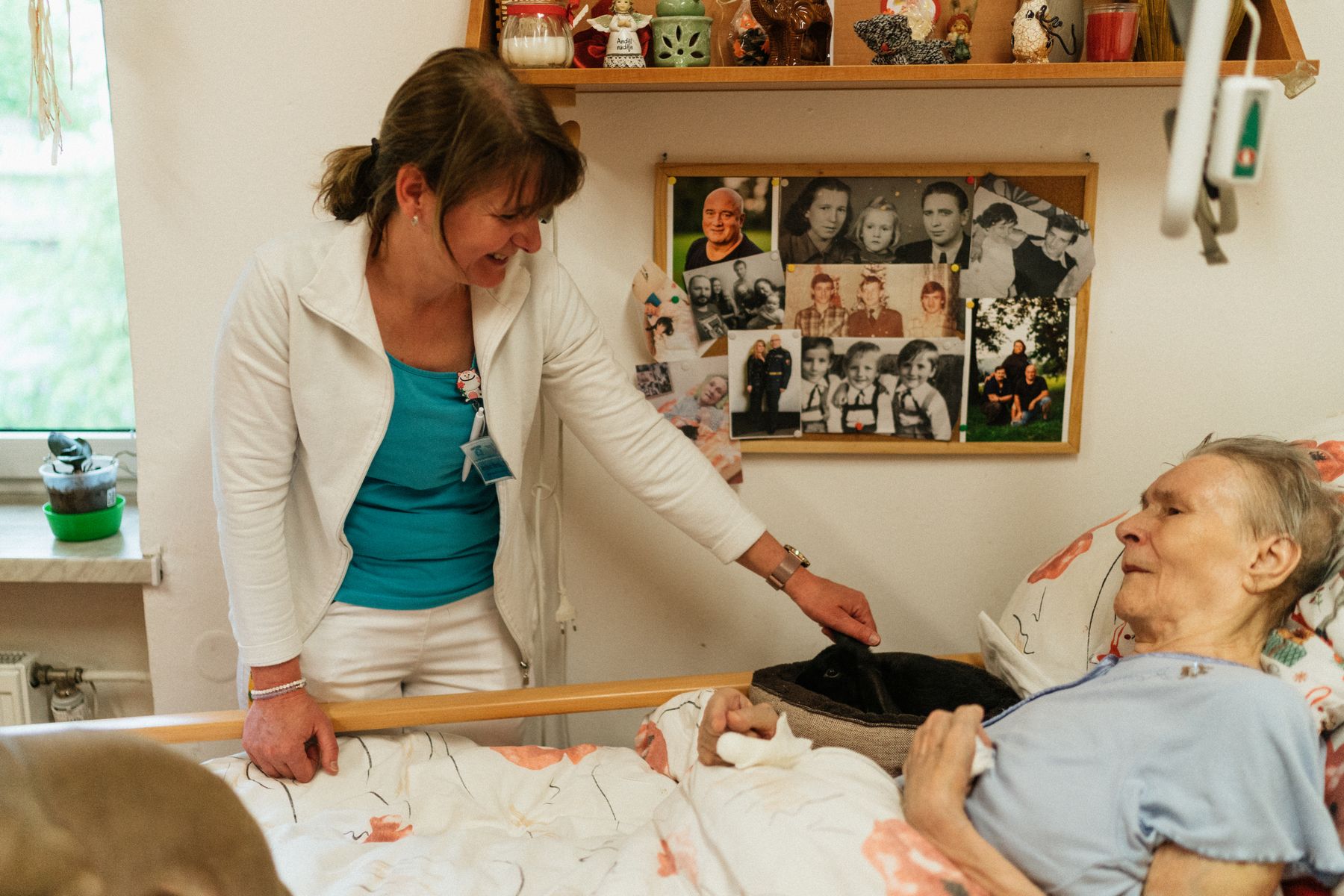
Recovery does not end when treatment does. KinetiCura supports rehabilitation providers and the people they care for by watching over movement, posture and safety during recovery, in the centre and at home.
Proactive Monitoring and Analysis for better care
The problem:
The weeks after leaving hospital are among the most vulnerable times in an older person's life. Krumholz described this as "post-hospital syndrome": a temporary period of generalised risk, often put at 30–90 days. In it, a person can be readmitted or become unwell for reasons unrelated to the original illness.1 The stay itself contributes. Bed rest, poor sleep, reduced nutrition and an unfamiliar environment can cause hospital-associated deconditioning, a loss of strength, balance and mobility. This is linked to longer stays and higher readmission rates,2 and it is part of the wider problem of hospitalisation-associated disability, where people cannot manage everyday tasks they could before admission.3 Weaker muscles and poorer balance raise the risk of falls and make a return to independent living harder. Social risks matter too. Among older adults discharged home with home health services, living alone, depressive symptoms, multimorbidity and functional impairment were all linked to loneliness.4 Isolation and lack of support can also mean that a deteriorating condition goes unnoticed.
KinetiCura learns each person's own pattern of movement and flags falls, unsteadiness and unusual stillness automatically, so therapists and nursing teams remain informed. Physical observation data gathered over time also allow us to detect deterioration or changes in physical posture or movement, which can be monitored and analyzed. This allows the care or clinical staff to be pro-active in the care they provide.
Insights for Analysis
While alerts are raised, addressing immediate emergencies, care therapists and clinical staff can review a resident's episodes across a number of dimensions.
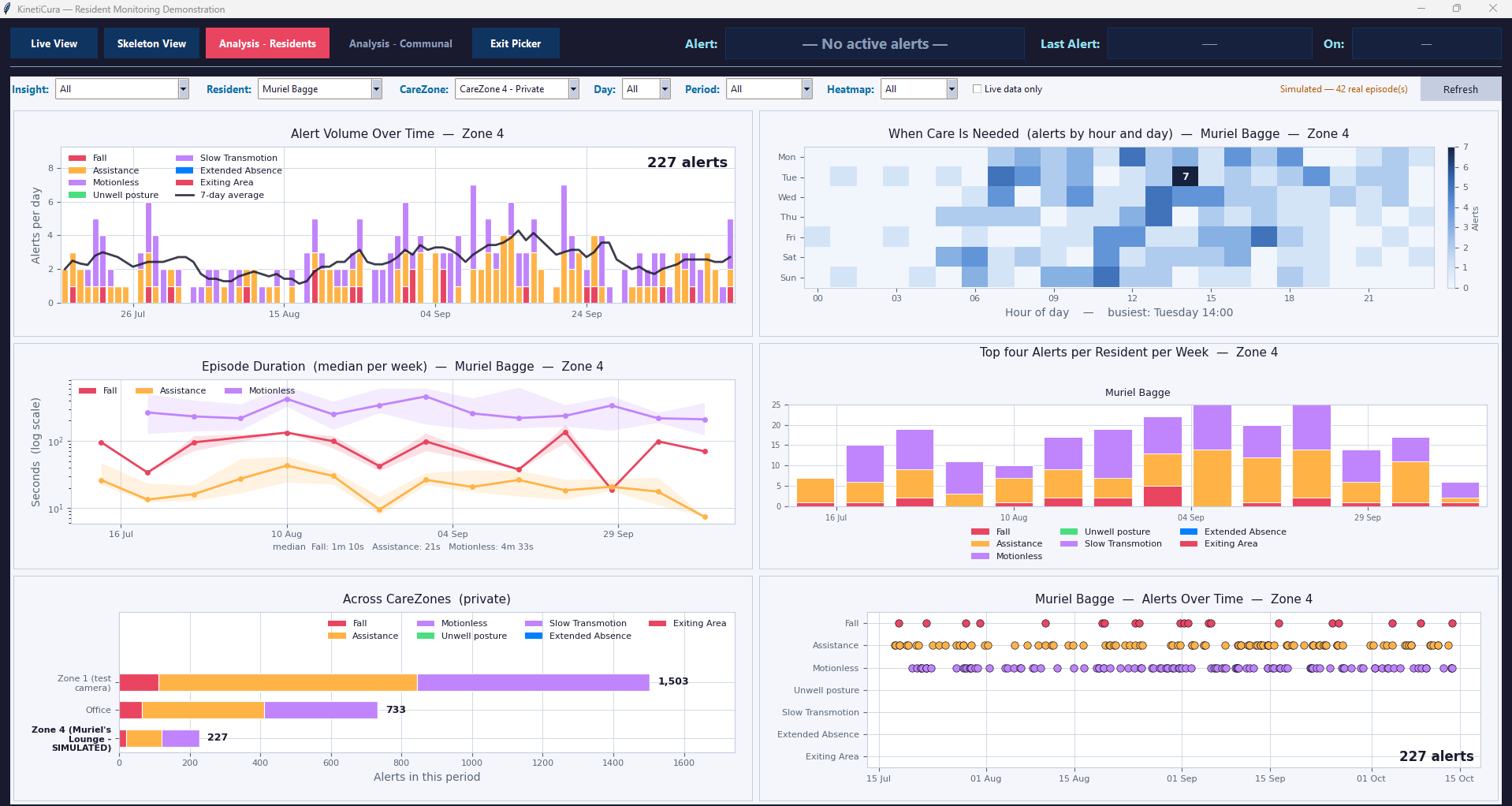
These insights are provided by default, but we are aware that rehabilitation providers' needs may be different. We will work with you to define and build fit-for-purpose insights for the care you provide.
A quotation tailored to your facility and needs
Every rehabilitation centre is different. After we have discussed your requirements with you, we will provide you with a quotation.
Safer recovery starts here
Tell us about your services and facility and we will show you how KinetiCura can support your team.
- Krumholz HM. Post-hospital syndrome: an acquired, transient condition of generalized risk. N Engl J Med. 2013;368(2):100–102. PMC3688067
- Hospital-associated deconditioning (qualitative study). BMC Geriatrics. 2021. doi:10.1186/s12877-021-02111-2
- Covinsky KE, Pierluissi E, Johnston CB. Hospitalization-associated disability: "She was probably able to ambulate, but I'm not sure." JAMA. 2011;306(16):1782–1793.
- Pollak C, et al. Loneliness and social isolation risk factors in community-dwelling older adults receiving home health services. BMC Geriatrics. 2025;25:290. Springer